Microsoft 365 Price Increases Are Coming. Here’s What Businesses Should Do Now.

For years, Microsoft 365 has been one of the easiest line items in the IT budget to renew without much thought. Most companies simply renew their licenses, add users when needed, and move on.
That approach is about to get a lot more expensive.
Starting July 1, 2026, Microsoft is increasing pricing across several Microsoft 365 and Office 365 commercial plans. While the percentage increases may not seem dramatic at first glance, the real financial impact adds up quickly for companies managing dozens, hundreds, or even thousands of users.
Here’s a look at some of the upcoming changes:
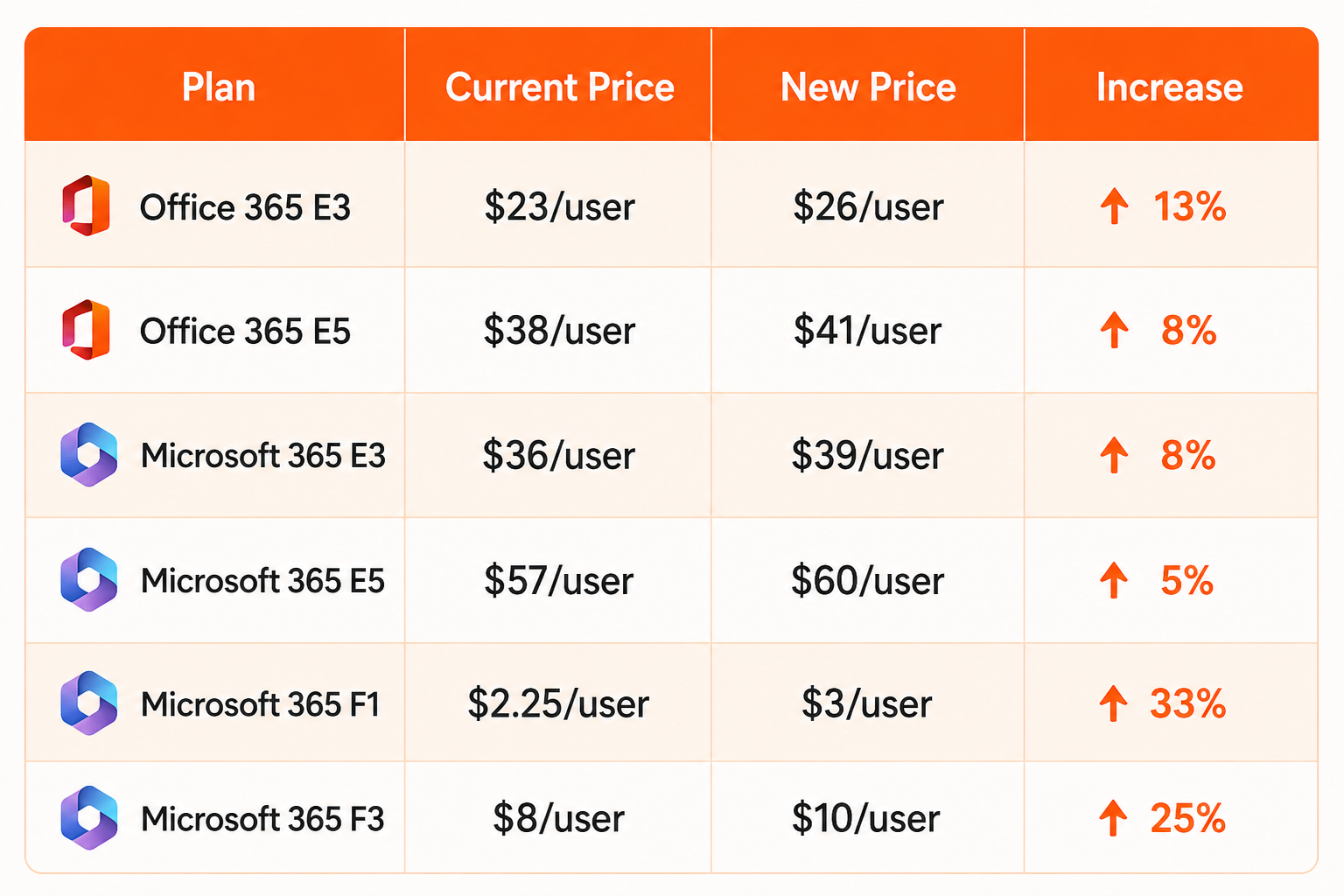
For companies with large user counts, these increases can create a serious jump in annual operating costs overnight.
And for many businesses, this comes on top of another change Microsoft already made behind the scenes.
In late 2025, Microsoft removed automatic volume-based discounts for many Enterprise Agreement customers. That means larger organizations no longer automatically benefit from discounted pricing simply because of their size. Some businesses may see another layer of cost increases during renewal periods because of that change alone.
The Bigger Problem Most Companies Haven’t Identified Yet
The truth is that many organizations are already overpaying for Microsoft 365 long before the new pricing takes effect.
This is incredibly common.
Over time, companies accumulate inactive accounts, unnecessary add-ons, duplicate services, and licensing tiers that no longer match how employees actually work. After a few years, it becomes difficult to tell what is truly needed and what is simply carrying over from previous renewals.
Some of the most common issues include:

Former employees still assigned active licenses
Employees on E5 plans who only use basic Office applications
Redundant security or compliance add-ons
Auto-renewals that happen without a licensing review
Frontline workers assigned licenses with features they never use
External contractors who still have active access months after projects end
When companies finally audit their Microsoft environment properly, the waste can be significant.
In many cases, simply “right-sizing” licenses can reduce Microsoft costs by 20% or more without removing functionality employees actually need.
Why Waiting Until Renewal Season Is a Mistake
One of the biggest problems businesses run into is timing.
Most organizations don’t start reviewing Microsoft licensing until renewal notices arrive. By that point, there’s usually pressure to make decisions quickly, limited room for negotiation, and very little time to evaluate alternatives.
A proper Microsoft licensing review takes time.
You need to:
analyze user behavior,
identify unnecessary licensing,
compare billing structures,
review cloud usage,
evaluate support needs,
and understand whether your current provider is still the right fit.
That process becomes much harder when the renewal deadline is already approaching.
Businesses that prepare early have more flexibility and far more leverage when it comes to reducing costs.
Not All Microsoft Vendors Deliver the Same Value

This is another area where companies often leave money on the table.
Many businesses buy Microsoft licensing through whichever reseller they’ve used for years without ever questioning whether they’re receiving strategic guidance, optimization support, or competitive pricing.
Some vendors simply process renewals.
Others take a much more proactive role by helping businesses:
optimize licensing structures,
reduce cloud waste,
improve security posture,
align licensing with actual usage,
and build long-term Microsoft roadmaps.
The difference between those approaches can represent thousands of dollars annually. A strong Microsoft partner doesn’t just sell licenses. They help businesses make smarter decisions around cloud infrastructure, security, collaboration tools, endpoint management, and long-term IT planning.
Why Businesses Are Turning to Technology Advisors
The Microsoft ecosystem has become more complicated than most internal teams have time to manage effectively.
Between licensing models, CSP agreements, security requirements, AI integrations, and cloud infrastructure decisions, many organizations simply don’t have the bandwidth to evaluate every option internally.
That’s where technology advisors have become increasingly valuable.
Instead of forcing companies to spend months researching vendors and comparing providers on their own, technology advisors help simplify the process and narrow the field quickly.
Legacy Tech helps businesses identify the right providers for Microsoft licensing, cloud services, managed IT support, and infrastructure optimization without wasting months in the evaluation process.
Rather than approaching the market blindly, companies gain access to:
vetted technology partners
licensing expertise
pricing guidance
faster decision-making
strategic recommendations tailored to their business goals
The goal is simple: help businesses avoid overspending while making smarter long-term technology decisions.
What Companies Should Be Doing Right Now
With Microsoft’s pricing changes approaching, businesses should start preparing now rather than waiting for renewal deadlines.
A few smart first steps include:
Audit Your Current Licensing
Review assigned versus active licenses. Many businesses discover they’re paying for inactive users or unnecessary subscriptions.
Review User Roles
Not every employee needs the same license tier. Matching users to the right plans often creates immediate savings opportunities.
Evaluate Billing Structures
Certain billing models now carry additional surcharges. Reviewing commitment terms can help reduce unnecessary costs.
Review Vendor Performance
If your current provider only sends renewal invoices without helping optimize costs, it may be time to reevaluate the relationship.
Start Planning Early
The earlier businesses review licensing strategy, the more negotiating flexibility they typically have.
The Bottom Line
Microsoft 365 pricing is increasing, and for many businesses, these changes could quietly add thousands of dollars in unnecessary costs over the next few years if no action is taken.
Legacy Tech helps businesses stay ahead of those increases by connecting them with qualified technology partners, helping evaluate licensing options faster, and identifying opportunities to reduce unnecessary Microsoft spending before renewal deadlines become a problem. In many cases, businesses are already overpaying without realizing it, simply because their licensing structure has never been properly reviewed.
The companies that usually save the most money are the ones that prepare early. Reviewing licensing now gives businesses the opportunity to identify waste, remove unused subscriptions, optimize user tiers, and avoid rushed renewal decisions later on.
This is also why choosing the right Microsoft partner matters. The right provider can help businesses reduce overspending, improve long-term licensing strategy, and make sure they are only paying for what they actually need.
Waiting until the last minute usually means fewer options, less negotiating flexibility, and higher long-term costs. Businesses that start planning now are typically in a much stronger position financially and operationally.