Rising Memory Costs: Smart Ways to Protect Your IT Budget.
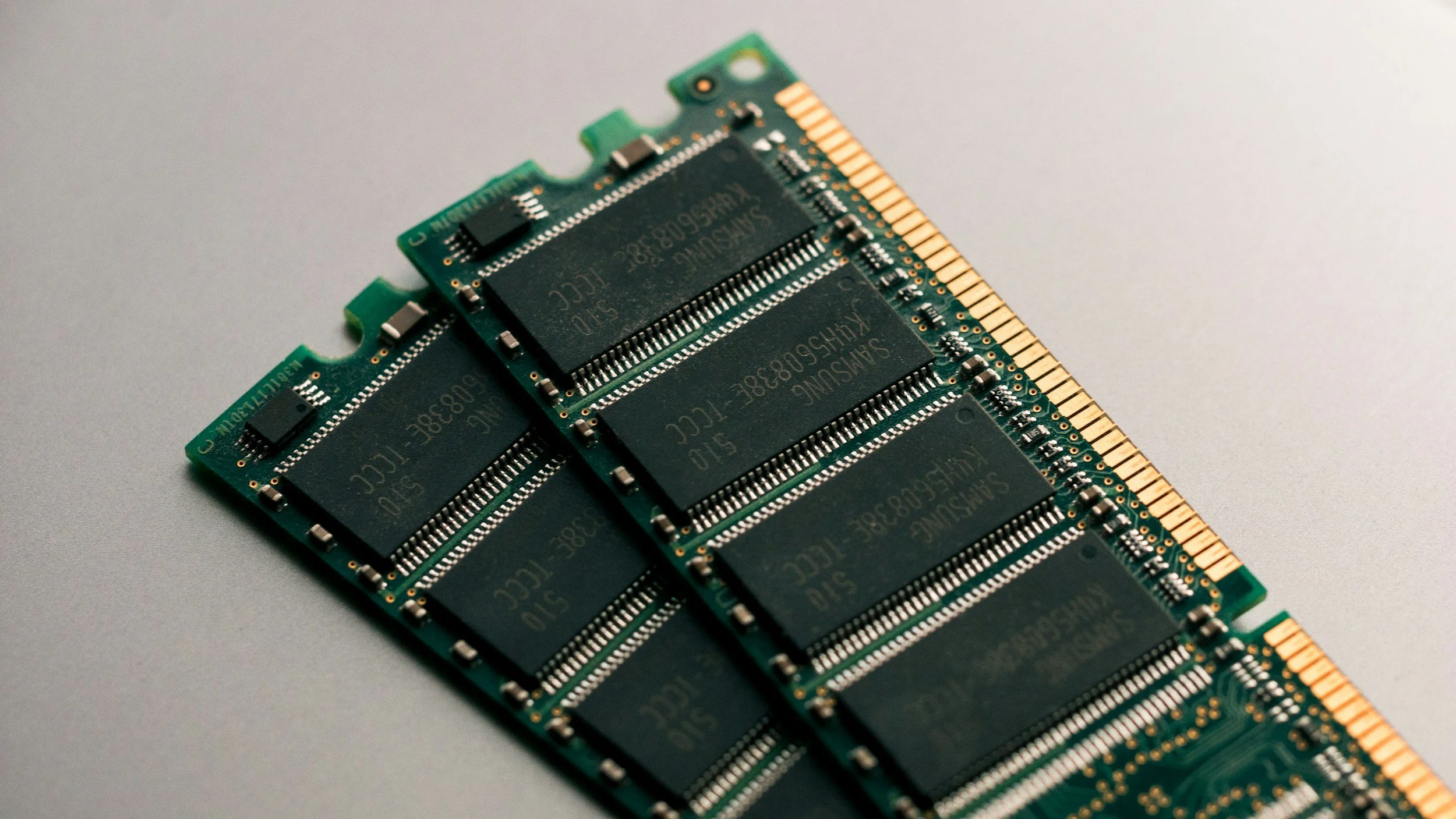
Rising RAM costs are reshaping hardware budgets.
If you have gotten quotes for new laptops, servers, or even a simple RAM upgrade lately, the numbers have probably surprised you. Prices are higher than expected, configurations are smaller than what you used to get at the same price point, and lead times on certain builds have gotten unpredictable.
This is not a one-time pricing adjustment. There is a real, ongoing shortage of computer memory that is working its way through the entire technology supply chain, and it is hitting business hardware budgets harder than most IT and finance leaders planned for.
This article explains what is going on, why it is not going away quickly, and what you can actually do to manage your hardware costs in this environment.
What Is the Memory Shortage and Why Does It Matter to You
Every device your team uses, from laptops and desktops to servers and networking equipment, depends on two types of memory. RAM handles the active work happening on that device right now. Flash storage, usually in the form of an SSD, keeps applications and data for the long term.
Since 2024 the global supply of both DRAM, which is the chip behind RAM, and NAND flash, which powers SSDs, has not kept up with demand. That gap has grown wider through 2025 and into 2026.
For your organization, this shows up in a few concrete ways. The same laptop configuration costs more than it did two years ago. Some device vendors are quietly shipping products with less RAM or smaller SSDs to stay within familiar price bands. High-density configurations are running into allocation limits and longer lead times. And quotes that look good today may not hold through the end of the quarter.
Why This Is Happening

AI workloads now sit at the front of the line for advanced memory and chips.
The short explanation is that artificial intelligence changed who gets priority in memory factories.
Cloud providers and the companies building AI infrastructure are consuming massive amounts of high-performance memory to run GPUs and AI servers. These buyers are locked into long-term supply contracts and are paying premium prices. Memory manufacturers have responded by shifting more of their factory capacity toward those AI-grade products because the margin is higher.
That leaves less capacity for the standard DRAM used in laptops and desktops, and less for the NAND flash used in the SSDs inside most business devices. DRAM contract pricing rose roughly 50 to 55 percent quarter-over-quarter entering early 2026, and some market trackers have reported total increases of 80 to 90 percent from pre-shortage levels. Multiple device manufacturers have adjusted their pricing upward by 15 to 20 percent as a direct result.
This is a different situation from the pandemic-era chip shortage, which was mostly a logistics and production disruption. What is happening today is a longer-term structural shift in how memory factories prioritize their output, and that does not reverse quickly.
How Long Will This Last
Most analysts and industry forecasters agree on one point: this is not going to resolve itself by next quarter.
Industry supply growth for DRAM and NAND is expected to remain below historical norms through at least 2026 and into 2027, while AI infrastructure investment continues to accelerate. Some forecasts warn that meaningful supply normalization may not arrive before late 2027 or even 2028.
For practical purposes, this means that assuming prices will fall back and you can refresh your hardware later at lower cost is a plan that carries real risk. The businesses that wait tend to face a combination of higher prices, tighter availability, and fewer configuration options when they eventually have to buy.
What This Means for Your IT Budget

IT and finance teams are reworking budgets to keep up with rising device and memory costs.
From where most IT and finance leaders sit, the memory shortage creates three specific problems.
First, your refresh budget simply does not go as far. Like-for-like specifications cost more, and some vendors are reducing base configurations to absorb the increase, which can shorten how long a new device stays useful.
Second, planning gets harder. Quotes expire faster as memory contract prices shift mid-quarter. Vendors are repricing between the time you get a quote and the time you are ready to order.
Third, standardizing your device fleet becomes more complicated. Some configurations are harder to source in volume, and lead times on memory-heavy SKUs can exceed 20 weeks in certain segments.
You cannot change what is happening in global semiconductor factories. But you can change how you manage the hardware lifecycle inside your own organization.
Extend the Life of What You Already Have

Extending the life of well‑running laptops can take pressure off refresh budgets.
One of the most practical responses to high memory prices is to stop assuming every device has a fixed two or three year replacement window.
Many business-class devices still perform well past the point where most companies replace them. The key is knowing which devices are genuinely underperforming for their users and which ones are being retired on schedule out of habit. When you make that distinction, you can safely keep a portion of your fleet in service longer, direct your budget toward the users who truly need a refresh, and avoid buying at the most expensive point in the pricing cycle.
There is also the question of what happens to devices when they leave service. Many organizations let retired hardware sit in storage because managing the disposal feels like more effort than it is worth. That hardware still has real value in secondary markets and, when memory prices are pushing up the cost of new equipment, recovering that value matters more than it used to.
Legacy Tech Consulting buys back more than ninety categories of business hardware, including laptops, desktops, telecom and networking gear, payment systems, and mobile devices. Instead of letting retired assets sit idle or paying to dispose of them, that equipment becomes recovered budget you can put toward new initiatives.
How Device as a Service Changes the Equation
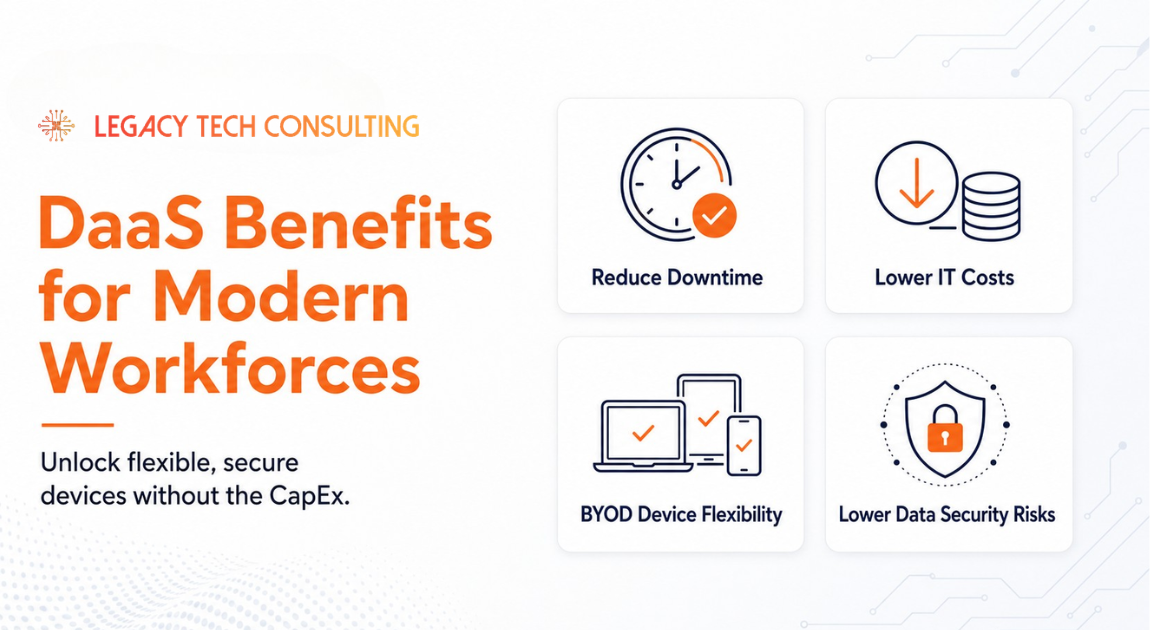
Device as a Service turns hardware into a predictable, fully managed service for modern workforces.
A growing number of organizations are rethinking not just how long they keep devices, but how they acquire them in the first place.
Device as a Service, or DaaS, is a model where you pay a single predictable monthly fee per user or per device instead of a large upfront hardware purchase. That fee covers the hardware, configuration, deployment, ongoing support, and end-of-life management, all in one subscription.
At Legacy Tech Consulting, we work with enterprise-grade DaaS solutions that go well beyond just swapping a purchase for a monthly bill. Here is what we can bring to the table for organizations navigating the current memory pricing environment.
We can structure DaaS programs that include auto-scaling virtual desktops, so your users always have the performance they need without your IT team having to manually manage device configurations as workloads change. Built-in patching, monitoring, and real-time management are part of the service, which means your devices stay current and secure without requiring internal resources to chase updates across a mixed fleet.
Security and compliance are woven into the solutions we recommend, not bolted on afterward. The DaaS programs we work with include managed endpoint protection, vulnerability management, and identity and access controls that meet compliance requirements across regulated industries including healthcare, finance, and professional services. For organizations that have been stretching hardware life to manage costs, this matters, because older devices running without active lifecycle management create security exposure that compounds over time.
For distributed or remote workforces, we can go further by structuring solutions where the desktop itself lives in the cloud rather than on the physical device. When applications and data are delivered virtually, the device in front of your employee only needs enough power to connect to a browser. That means you are no longer dependent on high-spec RAM and storage configurations to keep users productive, which directly reduces your exposure to memory price swings. It also means you can extend the useful life of existing hardware that would otherwise need to be replaced, because the computing burden moves off the device entirely.
We can also connect organizations with advisory-level support, including virtual CIO and technology strategy services, for those who want help thinking through a multi-year device plan rather than just making a one-time procurement decision. In a market this volatile, having a strategic view of your hardware environment is worth as much as any individual purchase decision.
Combining Buyback and DaaS for a Stronger Position
In practice, the organizations that navigate this best are not choosing between extending hardware life, using buyback, or switching to DaaS. They are combining all three in a way that makes sense for their specific environment.
A straightforward approach looks like this. Start by getting a realistic picture of what your current fleet is worth. Many companies are genuinely surprised when they see the recovery value of equipment sitting unused in storage. That budget can then be applied toward either higher-specification devices that will last longer through this pricing cycle or toward funding DaaS subscriptions for the parts of your workforce where managed lifecycle makes the most sense. From there, you build a device lifecycle plan that does not rely on a single annual refresh event, but instead manages devices in and out of your environment on a rolling basis.
This kind of approach does not require a massive change to how you operate. It just requires being intentional about how hardware enters and leaves your organization, which becomes far more important when market conditions are this volatile.
What You Should Do Now
The memory shortage is already showing up in your quotes and your refresh planning. It is not going away on a timeline that makes waiting a safe option.
Legacy Tech Consulting helps businesses stay ahead of hardware cost increases by turning retired equipment into usable budget, connecting organizations with the right DaaS and managed service solutions, and building hardware strategies that account for the pricing environment we are actually in, not the one from two or three years ago.
The companies that usually come out ahead are the ones that start planning before the pressure becomes urgent. Reviewing your hardware situation now gives you time to recover value from existing assets, right-size your refresh approach, and explore DaaS options before you are forced into a rushed decision at a bad point in the pricing cycle.
Waiting until the last minute usually means fewer options, less flexibility, and higher long-term costs. Businesses that plan early are almost always in a stronger position when the next round of quotes arrives.
To talk through your hardware situation or schedule a cost review:
Call: (978) 226-3897